Causes
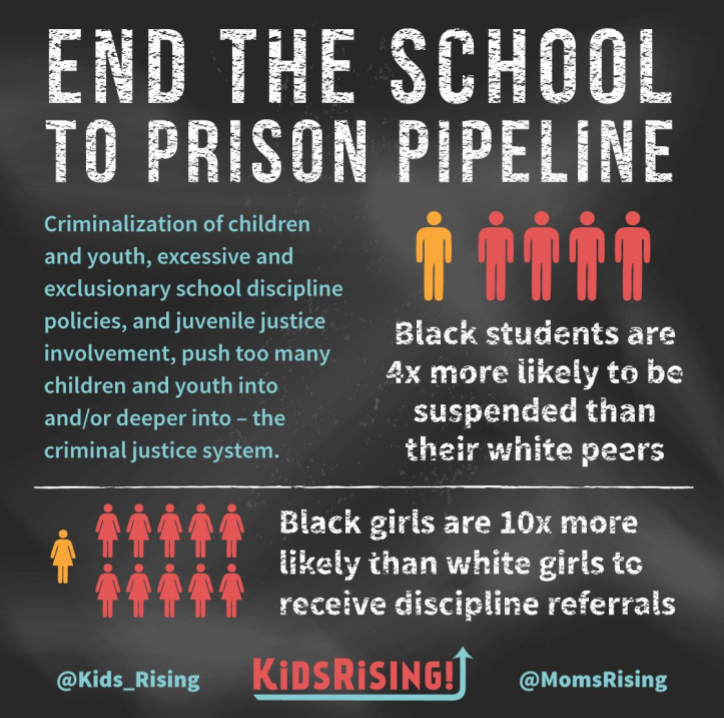
One of the main causes of the school-to-prison pipeline is school administration and the presence of police officers on campuses. Principles have almost exclusive authority in determining disciplinary actions. As a result, there is little accountability or supervision on dictating the extent of punishment. A school’s disciplinary strictness and practices often determine suspension, dropout, and incarceration rates. Some of the factors that play into a school’s strictness include, “zero tolerance policies, high stake testing, exclusionary discipline (suspensions), and explicit and implicit biases at individual and system levels” (McCarter). Zero tolerance policies include cracking down on small offenses and generally granting the same punishments for a ray of misconduct. For example, possession of marijuana in schools might be disciplined the same way as disobedience in class. As a result, suspension rates and juvenile contact with the justice system have increased dramatically since the 1990s. Teachers’ and administrators’ prejudice and implicit bias contribute to the perpetuation of harsher punishments for Black and brown youth. Teachers are more likely to sending Black students to the principles office or write reports for bad behavior. There is an unfair and unequal standard for Black students. The presence of police officers on campuses also plays a role in the STPP. When schools turn to resource officers for assistance in discipline, it is almost impossible not to start a juvenile record. “A report by the Justice Policy Institute found that even controlling for a school district’s poverty level, schools with officers had five times as many arrests for “disorderly conduct” as schools without them” (Vox). The presence of police officers encourages the STPP by disciplining students through the justice system, instead of handling it internally.
One of the main factors that I will be focusing on is suspension rates. The increase in suspension rates has caused students to be more likely to drop out, be on teacher’s watch lists, and be granted harsher punishments for repeated offenses. Suspension rates generally determine the severity and presence of school-to-prison pipelines across the country. Suspension rates vary across racial lines and geographical locations. Black students are suspended three times more than whites. The percentage of Black students at an institution also determines the suspension rates for that area. Suspensions do not help students, instead, it leaves them behind in academics, increase their chances of getting in trouble at home, and discourage them from returning to school.
Consequences
The school-to-prison pipeline disproportionately targets Black and brown youth starting as early as kindergarten. There are many consequences attached to early contact with the justice system including, increased dropout rates, poverty, and repeated involvement with the criminal justice system as adults. Juvenile incarceration and detention have repercussions in all aspects of society, from social to political and economic. The negative psychological effects of the criminal justice system include insanity, suicide attempts, and mental health deterioration. The political consequences include no longer having the right to vote or participate in the political sphere. The economic consequences of a criminal record include trouble finding employment and resources to re-enter society. “One study found that a criminal record reduces one’s chances of landing a job by 50 to 60 percent” (Desmond and Emirbayer 219). Citizens with criminal records are also denied public housing, food stamps, healthcare accessibility, and government assistance. The incarceration system limits individuals from fully participating in society instead of rehabilitating and restoring their humanity.
